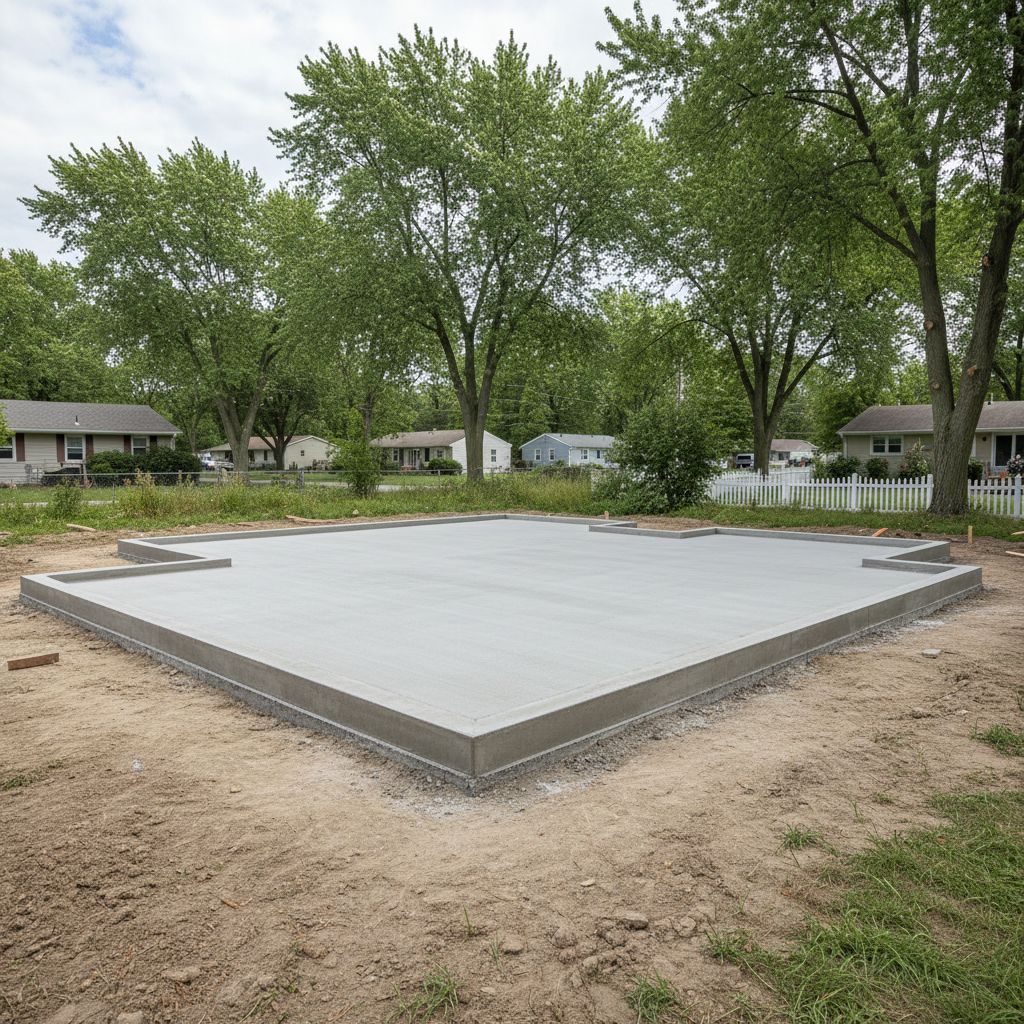
Building something new in Waukegan? Maybe it's a garage, an addition, or even a whole new house. Either way, you're going to need a really solid foundation. And let's be honest, one of the first things on your mind is probably, "What's this going to cost me?"
I've been pouring foundations around here for years with Valley Concrete Inc, and believe me, I've seen it all. There's no single price for a concrete foundation because so many things play a part. But I can definitely give you a pretty good idea of what to expect and what you should be keeping an eye out for.
What Makes Foundation Costs Go Up (or Down)?
A concrete foundation isn't just a big slab of concrete. It's a whole system, really, and how complicated that system is directly affects the price. Here's what we typically look at:
- Size and Type: This is probably the biggest factor. A small shed foundation, for instance, will obviously cost less than a full basement foundation for a 2,000 sq ft house. There are different types, too: slab-on-grade, crawl space, full basement. Each one needs different materials and labor. A simple slab might set you back $7-12 per square foot, while a full basement with 8-foot walls could easily be $25-40 per square foot of footprint — and that's not even counting the basement floor.
- Soil Conditions: This is huge, especially in Waukegan. We've got a lot of clay soil around here, particularly closer to the lake. Clay can be tricky stuff. It swells when it's wet and shrinks when it dries, which can put a lot of stress on a foundation. Sometimes, we have to dig deeper, bring in granular fill, or even use special footings to make sure everything stays stable. This adds to the cost, sure, but it's absolutely essential for a foundation that'll last. Expect to pay more for soil remediation if your site isn't perfect.
- Excavation Needs: Is your lot perfectly flat, or does it have a slope? Are there old foundations or big tree roots that need to be yanked out? More digging, hauling away dirt, or bringing in fill dirt all add to the heavy equipment time and labor hours.
- Concrete Mix and Reinforcement: Standard concrete is one thing, but if you need a stronger mix, or if the design calls for a lot of rebar, mesh, or post-tensioning cables, those material costs will definitely go up. For most residential foundations, we're talking about 3,500-4,000 PSI concrete, though sometimes more is necessary.
- Accessibility: Can our trucks and equipment get right up to the site? Or do we need to pump concrete a long way? Tricky access means more labor and specialized equipment, which, you guessed it, costs more.
- Permits and Inspections: Don't forget these. They're a necessary expense, usually a few hundred to a couple of thousand dollars depending on the project, and they make sure your foundation meets local Waukegan building codes.
- Additional Features: Things like waterproofing, drainage systems (think sump pits, drain tile), insulation, or special finishes for exposed walls will all bump up the total.
Typical Cost Ranges for Waukegan Foundations
Okay, let's talk some actual numbers. Keep in mind these are just broad averages for 2024, and your specific project might fall outside these ranges.
- Simple Slab-on-Grade (for a shed or small garage, for example): You might be looking at $7,000 - $15,000 for a 200-400 sq ft slab, and that includes basic digging and finishing.
- Larger Garage Slab (like a 2-car garage, 400-600 sq ft): This could run anywhere from $12,000 - $25,000.
- Crawl Space Foundation (for an addition, say, with a 500-800 sq ft footprint): Expect to pay $20,000 - $45,000. This covers footings, block or poured walls, and either a dirt floor or a thin concrete rat slab.
- Full Basement Foundation (for a new house, maybe a 1000-1500 sq ft footprint): This is the most complex option. You're probably looking at $40,000 - $80,000 or even more. This includes digging, footings, 8-9 ft poured concrete walls, and usually a concrete basement floor.
These figures are just for the foundation work itself, not the house framing or anything above ground.
What Should Be in Your Foundation Quote?
When you get a quote from a contractor, it shouldn't just be one big number. A good quote from Valley Concrete Inc, or frankly, any reputable company, will break things down. You'll want to see:
- Detailed Scope of Work: What exactly are they building? Dimensions, the type of foundation, wall height.
- Excavation: How much dirt is being moved? Is it being hauled away or spread on site?
- Materials: The type and strength of concrete, how much rebar/mesh, any specialized materials like waterproofing membranes.
- Labor: Hours and crew size.
- Equipment Rental: Excavators, concrete pumps, that sort of thing.
- Formwork: Materials and labor for building the molds for the concrete.
- Permits: Who's responsible for pulling them?
- Site Preparation & Cleanup: What's included here?
- Payment Schedule: How and when payments are due.
If a quote is just a few lines long, be careful. You really need specifics to compare apples to apples, don't you?
How to Avoid Overpaying
Nobody wants to get ripped off. Here's my advice:
- Get Multiple Bids: Three quotes is a good number to aim for. But don't just pick the cheapest one, that's often a red flag.
- Check References and Licenses: Make sure the contractor is licensed, insured, and has a good track record. Ask for local references — they're invaluable.
- Understand the Scope: Make sure every quote covers the exact same work. If one quote is way lower, it might be missing something really important.
- Ask Questions: If you don't understand something in the quote, just ask. A good contractor will take the time to explain it clearly.
- Don't Rush: Take your time to review everything. A foundation is a critical part of your structure; you want it done right.
- Review the Contract: Before any work starts, get everything in writing. Make sure the contract matches the quote and includes start and end dates.
A solid foundation is an investment in your property's future. It's definitely not an area to cut corners. Do your homework, ask the right questions, and you'll get a fair price for quality work.