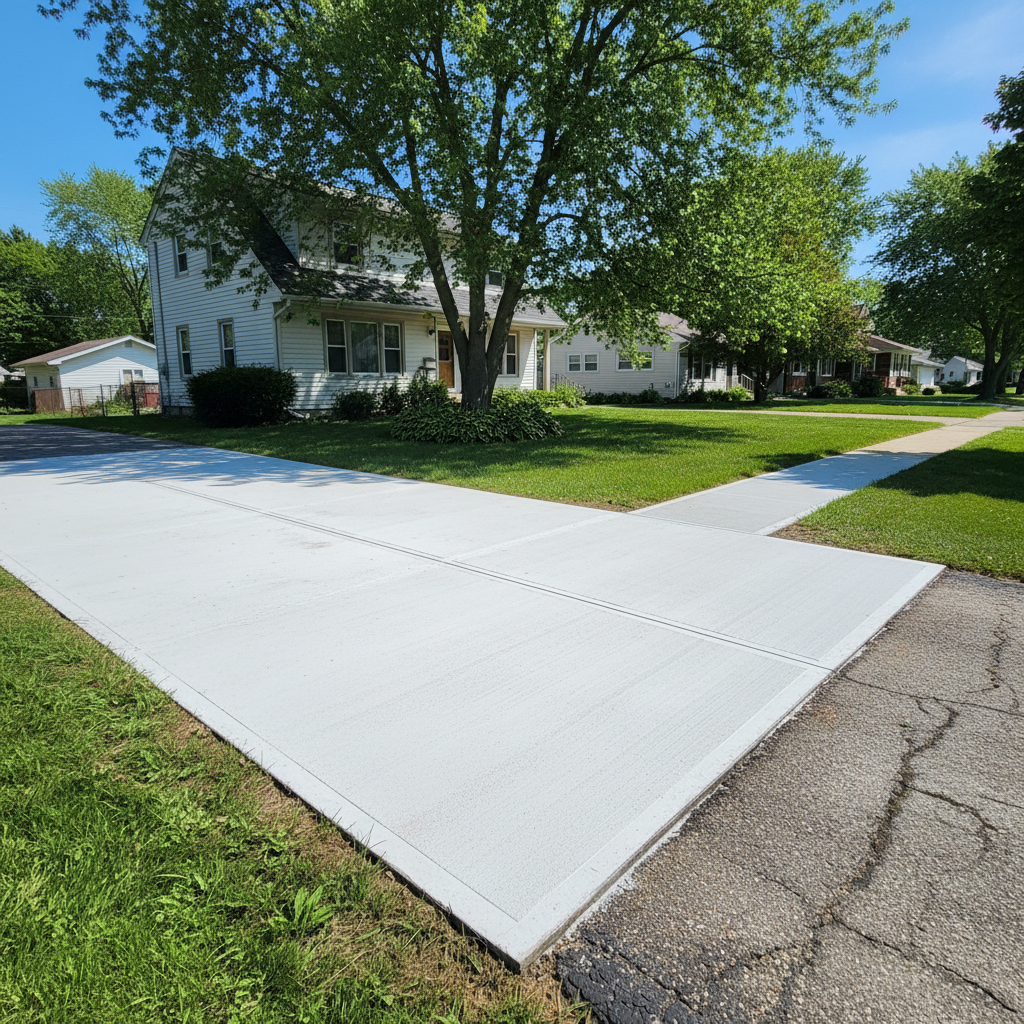
Alright, let's talk about concrete repair. Nobody wants to deal with cracked driveways or crumbling steps, but let's face it, it happens. Especially around here in Waukegan, with our crazy freeze-thaw cycles and that sometimes-shifting clay soil, concrete really takes a beating. When you spot those cracks, your first thought is probably, "How much is this going to set me back?"
That's a fair question, and I'm going to give you some actual numbers, not just vague estimates. But first, you've got to understand what actually goes into the pricing.
What Makes Concrete Repair Costs Go Up or Down?
It's not just about filling a crack, you know? There are a few big factors that really push the price one way or the other:
- The Type of Repair: Are we talking about a small, hairline crack that just needs a little sealant, or a big, structural crack that means we might need to cut out and replace a whole section? And mudjacking (or slab jacking, as some folks call it) to lift a sunken slab? That's a completely different animal than patching a spalled surface.
- The Size and Severity of the Damage: This one's pretty obvious, right? A 2-foot crack costs less to fix than a 20-foot crack. But it's also about how deep it goes and if there's any underlying damage to the sub-base.
- Accessibility: Can we get our equipment right up to the job site, or do we have to hand-carry everything through a narrow gate and around your prize-winning rose bushes? Jobs that are tough to get to always cost more because they take extra time and labor.
- Material Costs: The price of concrete, rebar, sealants, and other materials can, well, fluctuate. We're also talking about specialized materials for certain repairs, like epoxy injections for structural cracks.
- Labor: This is a big one. Skilled concrete workers aren't cheap, and for good reason. You're paying for their expertise, their safety, and their ability to do the job right the first time.
- Site Prep and Cleanup: Sometimes we need to do a lot of grinding, cleaning, or even digging before we can even start the repair. And then, of course, there's always the cleanup afterward.
Typical Concrete Repair Cost Ranges in Waukegan
Okay, let's get down to some actual numbers. Remember, these are general ranges for our area. Your specific job could be more or less depending on those factors I just mentioned.
- Hairline Crack Filling/Sealing: For minor, non-structural cracks, you're probably looking at $3 - $8 per linear foot. This is for surface-level stuff, usually with a good quality sealant.
- Patching Spalled or Chipped Concrete: If the surface is flaking or chipping, but the slab itself is sound, patching can run you anywhere from $50 - $200 per square foot for small areas, or $300 - $800 for larger patches, depending on the depth and prep needed. It's pretty labor-intensive to make it look good and last.
- Structural Crack Repair (Epoxy Injection): For deeper, more serious cracks that indicate structural issues, epoxy injection is a common solution. This can cost $15 - $30 per linear foot, sometimes more if it's a really complex crack pattern.
- Slab Jacking / Mudjacking / Polyurethane Foam Injection: If your concrete slab (driveway, patio, sidewalk) has sunk, lifting it back into place is often cheaper than replacement. Mudjacking (using a cementitious slurry) typically costs $5 - $10 per square foot of the area being lifted. Polyurethane foam injection, which is lighter and often more precise, can be $8 - $20 per square foot. A typical driveway section might run $700 - $2,500, while a whole driveway could be $2,000 - $6,000+ depending on the size and number of injection points.
- Partial Slab Replacement: Sometimes, a section is just too far gone. Cutting out and replacing a portion of a driveway, sidewalk, or patio can range from $10 - $25 per square foot, including removal of the old concrete, new sub-base prep, and pouring new concrete. For a 10x10 foot section, you're looking at $1,000 - $2,500.
These numbers include labor, materials, and disposal of old concrete if applicable. Don't forget that permits might be needed for larger jobs, especially if it's close to public property or involves significant structural changes, and that's an additional cost.
What Should Be in Your Concrete Repair Quote?
When Valley Concrete Inc gives you a quote, or any other reputable contractor, it should be clear and detailed. Here's what you should expect to see:
- A detailed description of the work: Exactly what's being repaired, what method will be used, and what materials.
- Scope of work: Will they remove debris? Prepare the sub-base? Apply a sealant afterward?
- Material breakdown: What type of concrete, epoxy, or lifting material?
- Labor costs: Often included in the overall price, but sometimes broken out.
- Equipment use: Any specialized machinery needed.
- Permit costs: If applicable, who is responsible for pulling them.
- Timeline: When they expect to start and finish.
- Warranty information: What guarantees do they offer on their work?
- Total cost: The final price, no surprises.
How to Avoid Overpaying for Concrete Repair
Nobody wants to get ripped off, especially for something as essential as concrete work. Here's my advice:
- Get Multiple Quotes: This is probably the most important thing you can do. Don't just go with the first guy who shows up. Get at least three detailed quotes. This helps you compare not just price, but also the proposed solutions.
- Understand the Repair: Ask questions! If a contractor can't clearly explain what they're doing and why, that's a red flag. A good contractor will educate you.
- Check References and Reviews: See what other Waukegan homeowners are saying. Online reviews are a good starting point, but also ask for local references.
- Don't Always Go for the Cheapest: The lowest bid often means corners are being cut, either in materials or labor. Concrete work is an investment; you want it done right so it lasts.
- Get Everything in Writing: A verbal agreement isn't worth the paper it's printed on. Make sure your quote is a formal contract, signed by both parties, detailing everything we just talked about.
- Ask About Warranties: A reputable company will stand behind their work. Ask what kind of warranty they offer on their repairs.
Dealing with concrete issues isn't fun, but getting it fixed properly will save you headaches and money down the road. Do your homework, ask the right questions, and you'll find a good local pro to get your concrete back in shape.