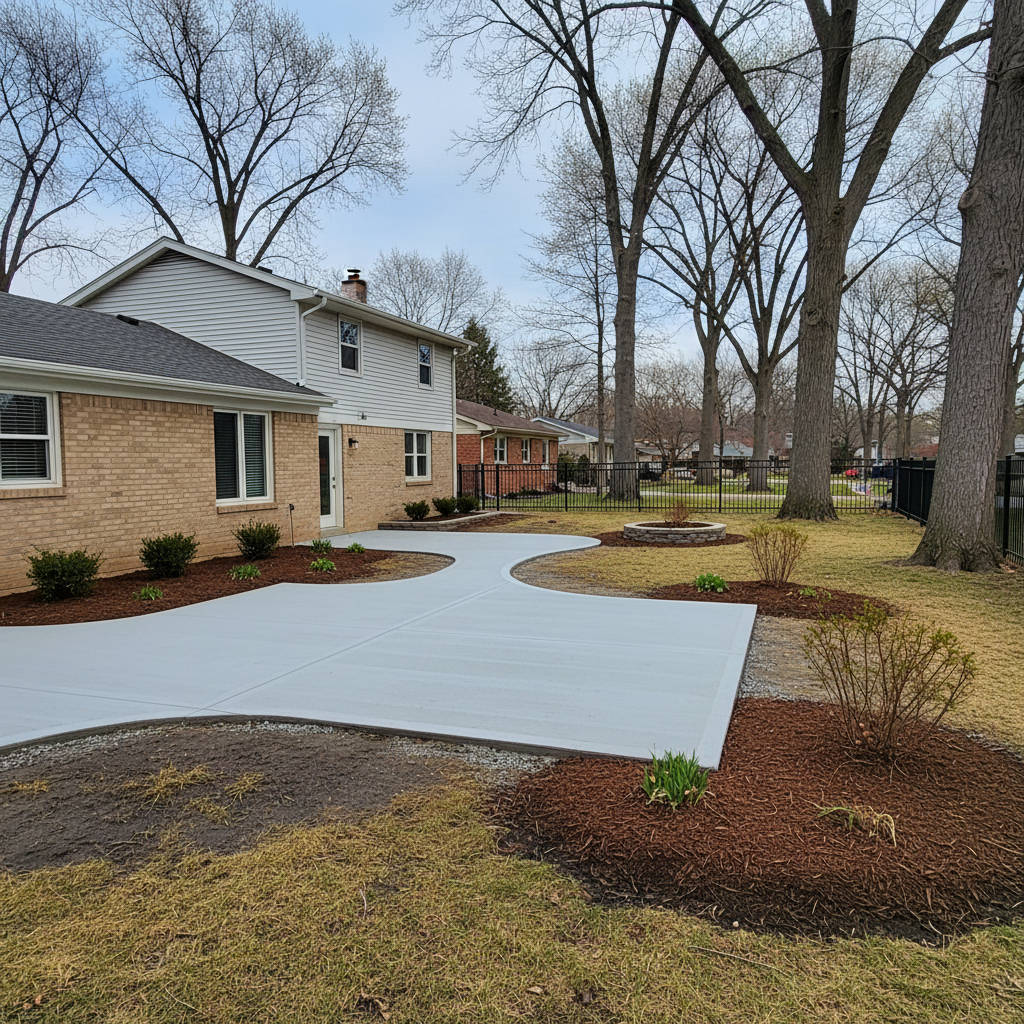
When's the best time to pour concrete around here? That's a question I get a lot, especially with our Waukegan weather. It's not just about getting the job done, you know; it's about getting it done right so it actually lasts. You've really got to consider our seasons, the ground, and whatever Mother Nature decides to throw at us.
Timing Your Waukegan Concrete Project: It's All About the Weather
Look, concrete isn't like painting a wall inside your house. It's a chemical reaction, and temperature plays a huge part in how it cures. You just can't pour it whenever. Here in Waukegan, we've got some pretty specific windows that work best.
Spring and fall are usually your sweet spots. We're talking about temperatures consistently above freezing, ideally between 50 and 70 degrees Fahrenheit. Why? Because that allows the concrete to cure slowly and evenly. If it's too hot, it dries too fast, which can lead to cracking. If it's too cold, the water in the mix can freeze before it cures properly, and that's a recipe for disaster. We're talking spalling, scaling, and a whole lot of headaches down the road.
Summer can work, but you've got to be careful. If we're hitting those 90-degree days, we have to take extra precautions. That means pouring early in the morning, sometimes using admixtures to slow down the set, and definitely keeping the concrete moist for longer after it's poured. You don't want it drying out too quickly.
Winter? Forget about it for new pours, generally speaking. Unless it's an absolute emergency and we're talking about heated enclosures and special mixes, it's just not worth the risk. The ground freezes, the air is cold, and you're fighting an uphill battle. You'll pay more for the extra measures, and you still might not get the quality you need. It's better to wait.
Weather Conditions That Affect the Job
It's not just temperature. A few other things can throw a wrench in the works:
- Rain: A light drizzle during the pour isn't ideal but can sometimes be managed. A downpour? No way. It adds too much water to the mix, weakens the concrete, and washes away the cement paste. We'll reschedule, period.
- Wind: High winds can dry out the surface of the concrete too quickly, especially on hot days. This can lead to surface cracking before the rest of the slab has a chance to cure. We might use windbreaks or apply curing compounds sooner.
- Humidity: Low humidity, combined with wind and high temps, is a triple threat for rapid drying. High humidity can slow down drying, which isn't always bad, but it means we have to adjust our finishing times.
When you call us at Valley Concrete Inc., we're always checking the forecast, not just for the day of the pour, but for a few days after. We want to make sure those initial curing days are as stable as possible.
Protecting Your Concrete Investment Year-Round
Once your concrete is in, you've done a good job picking the right time and the right crew. Now, how do you keep it looking good and lasting for decades? It's not rocket science, but it does take a little attention.
- Sealing: This is huge, especially with our freeze-thaw cycles here in Waukegan. A good quality penetrating sealer should be applied about 28 days after the pour, once the concrete is fully cured. Then, plan on resealing every 2-3 years, maybe more often if it sees heavy traffic or harsh chemicals. It protects against water penetration, salt damage, and staining.
- De-icing Salts: Try to avoid rock salt (sodium chloride) on your concrete, especially in the first year. It's really harsh and can cause surface damage. Calcium chloride or magnesium chloride are better options, but even those should be used sparingly. Sand is always a good, non-damaging alternative for traction.
- Heavy Loads: Don't park your RV or heavy equipment on your new driveway right away. Give it time to gain full strength. Even after it's cured, try to avoid concentrating heavy loads in one spot for extended periods.
- Cleaning: Keep it clean. Sweep off leaves and dirt regularly. If you spill something, clean it up quickly. Pressure washing is fine, but don't use too high a pressure or hold the nozzle too close, as it can damage the surface.
- Cracks: Minor hairline cracks are normal; concrete shrinks as it dries. If you see wider cracks (1/4 inch or more) or cracks that are heaving, give us a call. Sometimes they need to be sealed to prevent water from getting in and causing more damage during freezing.
Taking these steps will help your concrete stand up to our Waukegan weather, from the hot summers to the brutal winters, and keep it looking great for years to come. It's an investment, and like any good investment, it needs a little care.