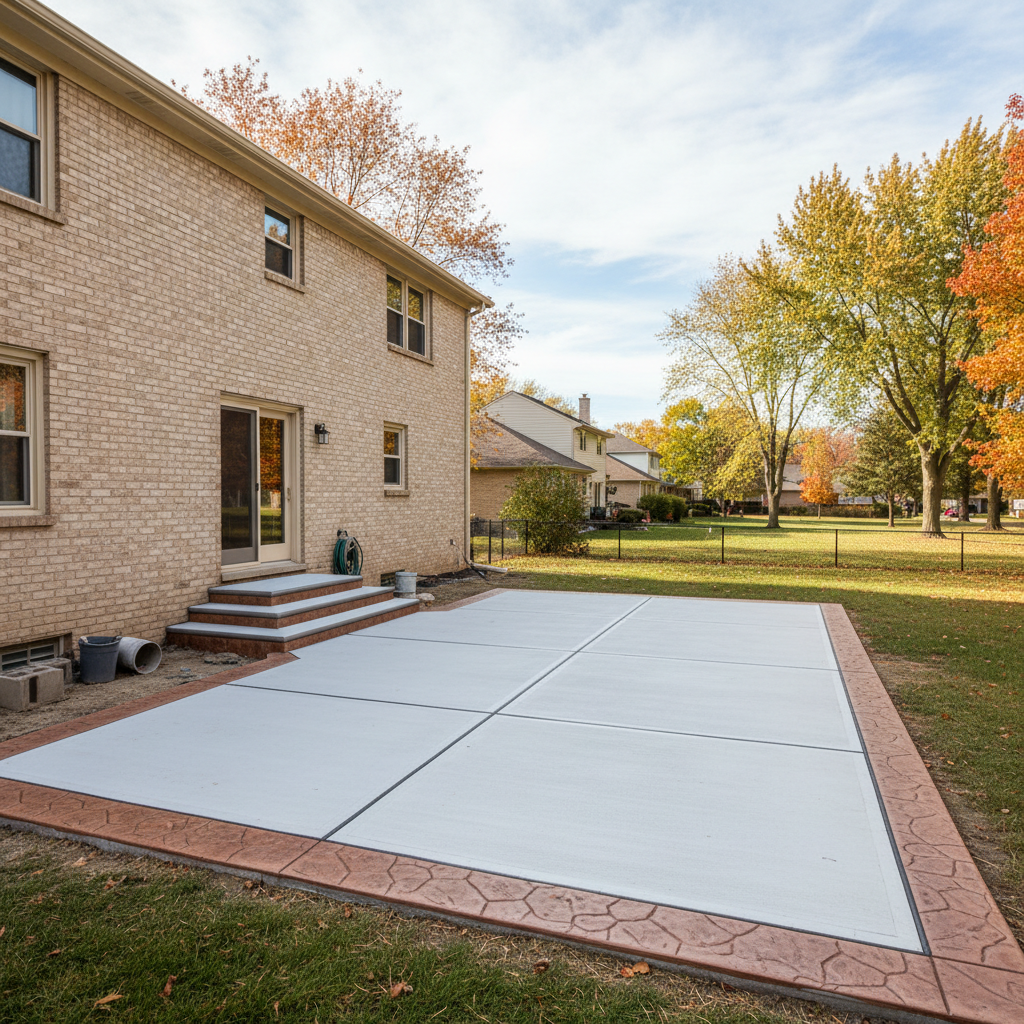
Ever stepped out onto a brand-new patio only to realize it feels cramped, or noticed water pooling right against your foundation after a heavy lake-effect rainstorm? Valley Concrete Inc has seen it happen many times across our neighborhoods here in Waukegan, IL. Homeowners get excited about transforming their backyard, but rushing into a flatwork project without proper planning is a recipe for cracked concrete and drained bank accounts.
We will look at what actually goes wrong during a concrete patio project and how you can avoid the headache.
Skimping on the Sub-Base Preparation
Here is the deal with our local soil conditions in Waukegan, IL. We deal with heavy clay and volatile freeze-thaw cycles every single winter. If a contractor tries to tell you they can pour your patio directly onto native soil without digging down and laying a deep, well-compacted crushed stone aggregate base, run the other way.
Without that solid structural foundation, the ground shifts when the frost hits. By year two, you will be looking at uneven slabs, cracked control joints, and tripping hazards right outside your back door. Valley Concrete Inc spends most of our time and sweat on the prep work before a single drop of concrete ever gets mixed, because that is what keeps the slab flat for decades.
Underestimating the Size You Actually Need
People always draw out a neat little square on paper, thinking a ten-by-ten slab is plenty of room for an outdoor lifestyle. Then the patio furniture arrives. Suddenly, you cannot pull your dining chairs out from the table without tipping off the edge of the concrete onto the grass.
If you plan on having a grill, a table, and some seating, you need to map out your footprint carefully. Go out into your yard with a garden hose and mark the perimeter. Walk around it. Make it bigger than you initially think you need, especially if you live on a wider lot near the lake where open-air space feels massive to begin with.
Ignoring Proper Slope and Drainage
Concrete is not a sponge, but water has to go somewhere. If your patio is poured dead level, you are inviting standing water to pool right after a storm. Even worse, if the slope directs runoff back toward your house instead of away from it, you are risking basement water intrusion.
A professional installation requires a precise pitch—usually about an eighth to a quarter-inch per foot—away from structural walls. It is a subtle detail, but if your contractor does not mention grading or drainage during the consultation, they are not looking out for your home's long-term health in Waukegan, IL.
Falling for the Lowest Bid
Everyone loves saving money, but ultra-low bids in the concrete trade almost always mean somebody is cutting corners. They might use a thinner pour depth, skip the wire mesh or rebar reinforcement, or use a cheap low-psi concrete mix that flakes off when winter salt gets tracked across it.
Ask hard questions about what materials are going into the mix and how thick the slab will be. Taking shortcuts upfront just means paying for a tear-out and replacement down the road. For homes in Waukegan, IL, Valley Concrete Inc provides Concrete Patio services that hold up to our northern Illinois weather.