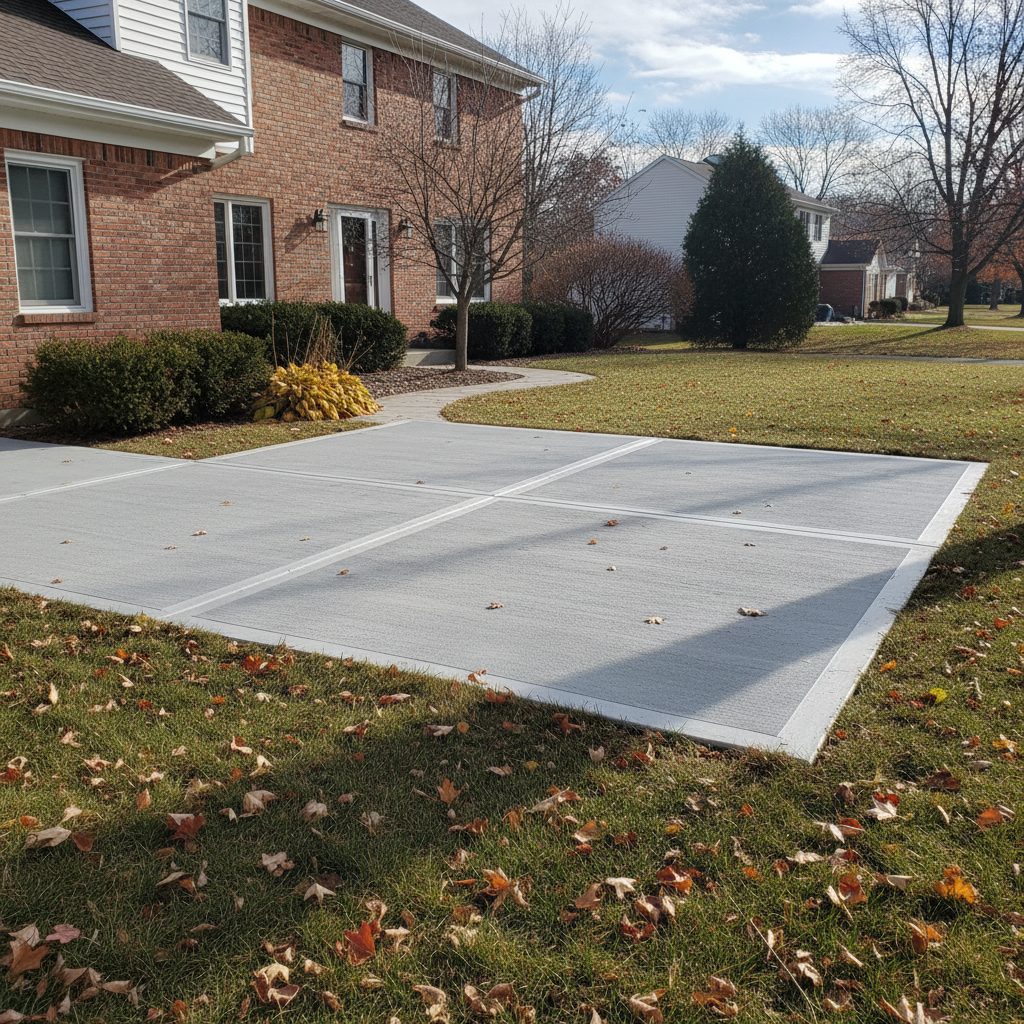
When's the best time to pour concrete around here? That's a question I get a lot, and honestly, it's a really good one. You might just think, "Concrete's concrete, pour it whenever." But here in Waukegan, with our lake effect weather and those wild temperature swings we get, timing is absolutely everything if you want your driveway, patio, or sidewalk to actually last.
Why Waukegan Weather Really Matters for Concrete
Our climate isn't like, say, Arizona. We're constantly battling serious freeze-thaw cycles. That's when water sneaks into tiny cracks, freezes, expands, and then thaws, leaving bigger cracks behind. It's a real killer for concrete if it hasn't cured right or if we've installed it in the wrong conditions. On top of that, the humidity coming off Lake Michigan can mess with drying times, and those sudden summer downpours? They're definitely not ideal when you've got a fresh slab.
You see, your concrete needs to cure properly. That's the chemical process where it hardens and gets strong. It's not just about drying out, you know? Temperature and moisture are super critical for this. If it cures too fast, too slow, or unevenly, you're just setting yourself up for problems down the road – things like cracking, spalling, and a much shorter lifespan for your investment.
The Best Time to Pour: Spring and Fall
From what I've seen over the years, late spring and early fall are usually your sweet spots for concrete work here in Waukegan. We're looking for consistent temperatures, ideally somewhere between 50 and 70 degrees Fahrenheit, and not too much rain in the forecast, if we can help it.
- Late Spring (May to early June): The ground has finally thawed completely, and daytime temperatures are reliably warm enough. Nights aren't usually dipping below freezing anymore, which is great. This gives the concrete a good, stable environment to cure in.
- Early Fall (September to mid-October): This is pretty similar to spring; you get those nice mild days. The ground is still warm from summer, which really helps with curing. You just need to keep an eye out for those first frost warnings, that's all.
These periods offer the best balance of temperature and moisture. That lets the concrete achieve its maximum strength without getting rushed or stressed by extreme conditions.
When to Be Wary: Summer and Winter
Summer Challenges
Summer can be tricky. While it's warm, you've really got to watch out for those super hot days, especially if it's humid. High temperatures can make the concrete dry too quickly, which leads to surface cracks before it's even fully cured. We can work around this by pouring early in the morning, using special curing compounds, or even misting the surface, but it definitely adds a layer of complexity. Oh, and those pop-up thunderstorms? A total nightmare for fresh concrete. If it rains hard on a newly poured slab, it can wash out the cement paste, weaken the surface, and leave it looking rough. Not good.
Winter Woes
Winter? Just forget about it for new pours. You absolutely do not want to pour concrete when temperatures are consistently below 40 degrees Fahrenheit, and especially not when there's a risk of freezing. Water in the mix can freeze before the concrete has a chance to set and gain strength. This causes it to expand and literally blow apart the slab from the inside. Even with special additives and blankets, it's a huge risk and often just not worth the headache or the potential for a failed project. We just don't do it at Valley Concrete Inc unless it's an absolute emergency and we can completely control the environment, which isn't usually the case for residential outdoor work.
Protecting Your Investment Year-Round
Once your concrete is in and cured, your job isn't quite over. A little care goes a long way, especially with our Waukegan winters.
- Seal it: I can't stress this enough. Sealing your concrete every few years is like putting a raincoat on it. It helps repel water, which, let's be honest, is your biggest enemy when it comes to freeze-thaw damage. It also protects against stains and makes cleanup a lot easier.
- Avoid de-icing salts: Many de-icing salts, especially those with ammonium nitrates or sulfates, are really harsh on concrete. They can cause spalling and deterioration. If you need to de-ice, look for products that are concrete-safe, often those with calcium chloride or magnesium chloride. Better yet, just use sand for traction.
- Clean it regularly: Just a good sweep and an occasional wash with a mild detergent can prevent grime and organic matter from building up and holding moisture against the surface.
- Address cracks early: Small cracks happen. It's concrete, after all. But if you see them, get them sealed. Don't let them become highways for water to get underneath and wreak havoc during a freeze.
Taking these steps will help your concrete stand up to our Waukegan climate for years to come. It's all about understanding what our local weather throws at us and being proactive. If you're planning a project, give us a call. We can talk through the best timing for your specific situation.