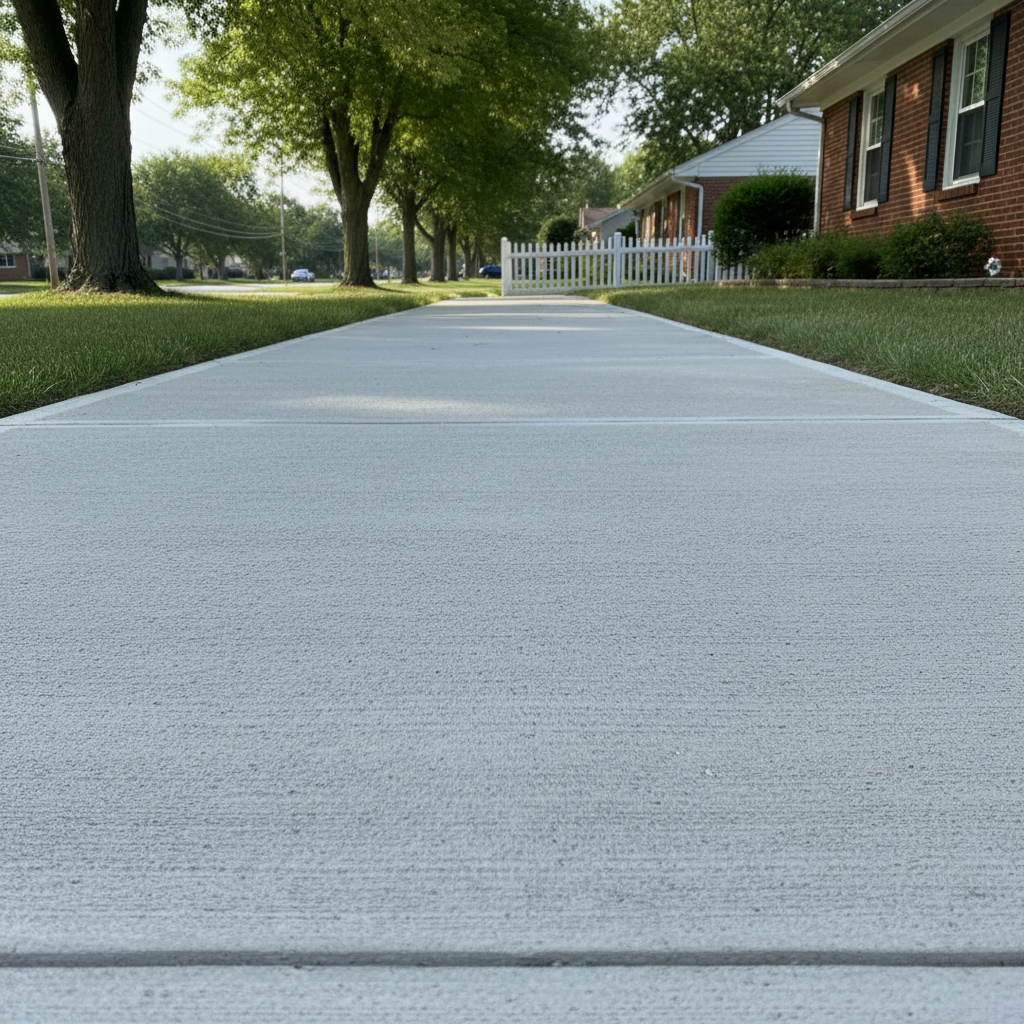
Alright, let's talk sidewalks. Around here in Waukegan, especially with our crazy winters and then the thaw, I get a lot of the same questions from homeowners about their concrete sidewalks. It's a key part of your property, after all, and you want it to look good and stay safe. So, I figured I'd tackle some of the most common things people ask me at Valley Concrete Inc. when they're thinking about their sidewalks.
What causes those cracks in my concrete sidewalk?
This is probably the number one question I get. Cracks happen for a few main reasons. First, there's settlement. The ground underneath your sidewalk can shift, especially if it wasn't prepped right. Or maybe you've got a lot of clay soil, like we do in parts of Waukegan, which expands and contracts a lot with moisture. When that ground moves, the concrete above it can't always handle the stress. So, it cracks.
Then there's freezing and thawing. Water gets into tiny pores or existing cracks in the concrete. When it freezes, it expands, pushing the concrete apart. When it thaws, it leaves a void. Repeat that cycle a few dozen times over a winter, and you're going to see some damage. Tree roots are another big culprit. They're strong, they grow, and they'll push right through or lift concrete sections if they're too close. Lastly, heavy loads. If you're constantly driving a heavy vehicle over a sidewalk designed only for foot traffic, you're asking for trouble. Really, you are.
How long should a new concrete sidewalk last?
A well-installed concrete sidewalk, done right with the proper base and mix, should easily last you 20 to 30 years. Sometimes even more! I've seen sidewalks around older homes in the Near North Side neighborhood that are still holding up pretty well after 40 years, though they might show some wear. The key is that initial installation: proper sub-grade preparation, good drainage, the right concrete mix for our climate, and correct expansion joints. Skimp on any of those, and you're just cutting its lifespan short.
Do I really need expansion joints? What are they for?
Absolutely, you need them. Think of expansion joints as built-in stress relievers for your concrete. Concrete expands and contracts with temperature changes. Without those joints, when the concrete heats up and tries to expand, it has nowhere to go. That pressure builds up and eventually, you guessed it, it cracks randomly. Expansion joints, usually made of a compressible material like asphalt-impregnated fiberboard, give the concrete room to move. They control where the concrete is allowed to crack, making it look much neater and last longer. We typically put them in every 5 to 10 feet, depending on the slab size and how much movement we expect.
My sidewalk is sinking in one spot. Can it be fixed, or does it need to be replaced?
It depends on how bad it is and why it's sinking. If it's just a section or two that's settled a bit, often we can lift it using a process called mudjacking or polyjacking. This involves drilling small holes and pumping a material (either a cement slurry or a polyurethane foam) underneath the slab to raise it back to level. It's usually less invasive and cheaper than a full replacement. However, if the concrete is severely cracked, crumbling, or the underlying issue (like a massive tree root or a major drainage problem) hasn't been addressed, then replacement might be the only long-term solution. I always recommend getting someone to look at it to figure out the root cause.
What's the deal with drainage? How does it affect my sidewalk?
Drainage is huge, probably one of the most overlooked aspects. If water isn't draining away from your sidewalk properly, it's going to cause problems. Standing water can seep underneath the slab, softening the base and leading to settlement. In winter, that water freezes and thaws, causing frost heave and eventually cracking. We always make sure new sidewalks are installed with a slight slope, usually about 1/4 inch per foot, to direct water away from your home's foundation and off the sidewalk itself. Good drainage protects not just your sidewalk, but your whole property. It's that important.
Can I pour a new sidewalk myself to save money?
Look, I'm all for DIY projects, but pouring a concrete sidewalk isn't like painting a wall. It's a lot more complex than most people realize to do it right. You need to know about proper sub-grade compaction, formwork, the right concrete mix, how to get the correct slope for drainage, and then the finishing and curing process. If you mess up any of those steps, you'll end up with a sidewalk that cracks prematurely, collects water, or looks terrible. In the long run, you'll likely spend more to fix or replace a poorly done DIY job than you would have hiring a professional like Valley Concrete Inc. from the start. It's heavy, time-sensitive work that requires specific tools and experience.
How do I maintain my concrete sidewalk to make it last longer?
It's not rocket science, but a little care goes a long way. First, keep it clean. Sweep off dirt, leaves, and debris regularly. Don't let puddles sit for long periods. If you have trees nearby, keep an eye on roots and address them before they become a problem. In winter, be careful with de-icing salts. Some products, especially those containing ammonium nitrate or ammonium sulfate, can be really harsh on concrete. Use calcium chloride or potassium chloride sparingly, or even better, just sand for traction. Also, seal your concrete every few years. A good quality penetrating sealer will help protect against moisture intrusion, freeze-thaw cycles, and staining. It's like putting sunscreen on your skin – it protects it from the elements.
Hopefully, this clears up some of those nagging questions you might have about your concrete sidewalks. If you've got more questions or need a hand with a project, you know who to call.